Most Liked Blogs

10 Most Beautiful Birds in the World

Blue Jay Spiritual Meaning: What Their Appearance Reveals About Your Life

What is the Spiritual Meaning of a Bird Flying in Your House?

The Spiritual Meaning Of Owl: Wisdom, Transformation, And Guidance

Blogs

Throated Hummingbird

Ruby-Throated Hummingbird: 2026 Guide to North America's Tiniest Jewel

The ruby-throated hummingbird is the most widely distributed and commonly recognized hummingbird in North America. It is the only hummingbird species to regularly breed in the eastern United States and its colorful green and red plumage is instantly familiar to many birders.
Do Sandhill Cranes Mate for Life? The Truth About These Loyal Birds

Do Sandhill Cranes Mate for Life? The Truth About These Loyal Birds

Quick Answer Yes, sandhill cranes are monogamous birds that typically form long-term pair bonds lasting many years, often for life. However, if a mate dies or a pair repeatedly fails to raise chicks, they may form a new bond to improve their chances of reproductive success. Across the wetlands and prairies of North America, the resonant, rattling call of the sandhill crane echoes through the sky. Standing up to four feet tall with a wingspan exceeding six feet, these ancient birds are celebrated for their graceful dancing, prehistoric appearance, and remarkably strong social bonds. One of the most common questions among birdwatchers is whether sandhill cranes truly mate for life. Below, we explore their courtship rituals, breeding habits, and enduring partnerships — backed by decades of ornithological observation. What Does “Mating for Life” Mean in Sandhill Cranes? Sandhill cranes form stable, long-term pair bonds rather than seasonal partnerships. Key characteristics include: Pairs stay together year-round, not just during breeding season They migrate, feed, and defend territory as a unit Bonds can last decades due to their long lifespan Most pairs stay together until one partner dies. This strong fidelity makes sandhill cranes a classic example of lifelong monogamy in the bird world. Sandhill Crane Mating Behavior Explained Sandhill cranes reach sexual maturity between two and seven years of age. Pair formation involves elaborate visual displays and vocal coordination. Their famous courtship dance includes bowing, leaping, wing-spreading, and tossing sticks or grass into the air. Importantly, this dance is not limited to courtship — established pairs continue performing it year-round to strengthen their bond. They also perform a synchronized unison call, a duet in which the female typically produces two notes for every one from the male. This distinctive vocal display helps maintain connection even within large flocks. How Long Do Sandhill Cranes Stay Together? Most sandhill crane pairs stay together for many years, often for life. Their long lifespan plays a major role in this stability. Wild lifespan commonly exceeds 20 years. Captive individuals can live over 30 years. Pair bonds often last the majority of adulthood. This long-term partnership reduces the need to repeatedly find new mates and improves breeding success over time. Do Sandhill Cranes Ever Change Mates? Although sandhill cranes are monogamous, they do not always stay with the same partner forever. Mate changes happen under specific conditions. If one mate dies, the surviving crane will find a new partner If a pair repeatedly fails to raise chicks, they may separate This behavior reflects an adaptive reproductive strategy. Maintaining a successful pair bond is essential for raising offspring, so re-pairing improves long-term success. Courtship Dance and Pair Bonding The sandhill crane’s courtship dance is one of nature’s most captivating spectacles. Young unpaired cranes begin performing it as they reach maturity. For established pairs, the dance becomes a year-round ritual that reinforces trust and coordination. Movements include synchronized bowing, leaping, running with wings spread, and object-tossing. These displays not only attract potential mates but also help assess compatibility and reaffirm existing bonds. Breeding and Parenting: A True Partnership Once bonded, sandhill cranes operate as a highly coordinated team during the breeding season. They return to the same nesting areas each year and build their nests together in shallow wetlands. The female typically lays two eggs, and both parents share incubation duties over about a month. After hatching, the chicks, known as colts, are cared for by both parents, who protect them, guide them to feeding areas, and teach essential survival behaviors. This extended parental care can last up to 9–10 months and often includes the bird’s first migration, making cooperation between mates essential. Do Sandhill Cranes Migrate Together? Yes. Migratory pairs stay close throughout their journey, even when traveling in large flocks. They frequently return to the same breeding and wintering grounds year after year, reinforcing both site fidelity and their pair bond. Sandhill Cranes vs Other Monogamous Birds Many bird species form monogamous bonds, but sandhill cranes are among the most consistent in maintaining them over time. Compared with swans, geese, and albatrosses, sandhill cranes combine long lifespan, shared parenting, and year-round association. While some species exhibit higher rates of mate switching, crane pairs tend to remain stable unless disrupted by external factors. Bird Species Lifespan Bond Duration Key Feature Sandhill Crane 20+ Years Lifelong (Usually) Year-round association & dancing Swan 10-15 Years Lifelong Strong territorial defense Albatross 50+ Years Lifelong Part during the non-breeding season Why Their Pair Bond Matters for Survival The strong pair bond of sandhill cranes is not just symbolic; it plays a direct role in survival and reproductive success. Coordinated parenting improves chick survival, while long-term familiarity between partners increases efficiency in nesting and territory defense. Because of this, losing a mate can temporarily reduce a crane’s ability to reproduce until a new bond is formed. FAQ 1. Do sandhill cranes really mate for life? Yes, sandhill cranes typically mate for life. They form strong pair bonds that often last until one of the mates dies. If one dies, the survivor will find a new partner. 2. What happens if a sandhill crane's mate dies? If a sandhill crane loses its mate, it will mourn and eventually seek a new partner. The surviving crane needs a mate to successfully breed and raise young, so finding a new partner is essential for its survival and reproductive success. 3. Do sandhill cranes ever "divorce" and change mates? While rare, it can happen. If a pair repeatedly fails to successfully raise chicks, they may separate and find new mates. This is a practical evolutionary strategy to improve reproductive success. 4. Why do sandhill cranes dance? Their famous dance serves several purposes: it is used in courtship to attract a mate, to strengthen the pair bond between mates, and to communicate with other cranes. It is a year-round activity for established pairs. 5. How long do sandhill cranes live? Sandhill cranes are long-lived birds. In the wild, they can live for over 20 years, and in captivity, they have been known to reach 30 years or more. Their longevity allows for their long-term pair bonds. 6. Are sandhill cranes monogamous? Yes, sandhill cranes are monogamous. They form one mate at a time and remain with that partner for life, making them a classic example of lifelong monogamy in the bird world. Conclusion The sandhill crane stands as a testament to the beauty of enduring partnership in the animal kingdom. The answer to "do sandhill cranes mate for life?" is a resounding yes, though nature is pragmatic and exceptions do exist. From their graceful courtship dances to their shared responsibilities in nesting and raising young, sandhill crane partnerships span years and, in many cases, decades. Their recovery from historic population declines stands as a reminder of what dedicated conservation can achieve — and protecting these loyal birds means protecting one of nature's most enduring love stories for generations to come.
what birds mate for life

Birds That Mate for Life: 30+ Species with Lifelong Bonds (2026 Guide)

Many birds form long-term pair bonds, known as social monogamy, that often last for life. Driven by the need for biparental care, territory defense, and breeding efficiency, this behavior boosts chick survival rates dramatically. While true genetic monogamy is rare due to occasional extra-pair mating, species like bald eagles, swans, cardinals, and mourning doves frequently reunite year after year. 
15 Birds With Orange Chests: Expert ID Guide

15 Birds With Orange Chests: Expert ID Guide

Birds are among nature's most elegant creatures, and those with orange chests are particularly striking. Their plumage makes them easy to spot and serves various ecological and behavioral purposes. Let's explore some of these beautiful birds, where they live, and what makes them unique.
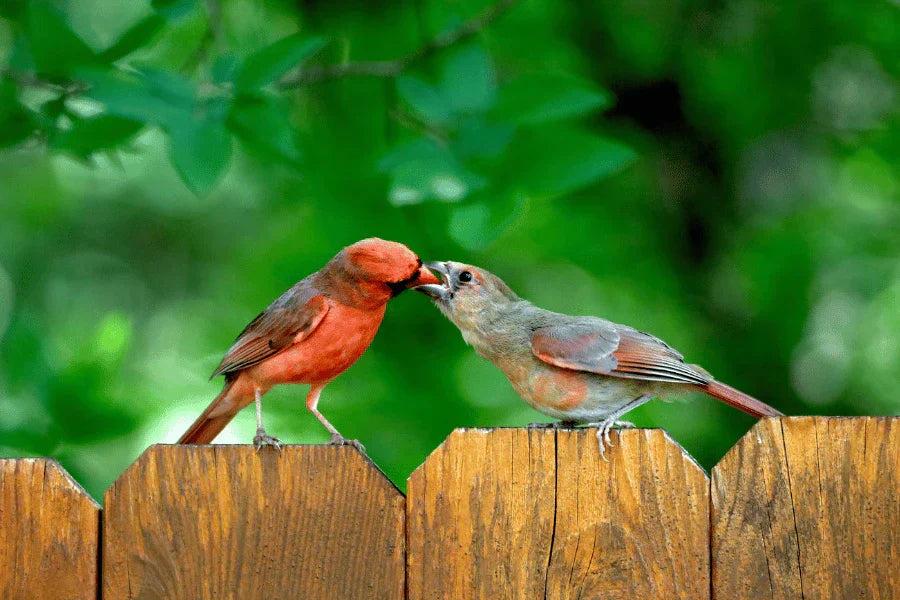
do northern cardinals mate for life

Do Northern Cardinals Mate for Life? Story Behind Loyalty

Do northern cardinals mate for life? Explore the fascinating truth behind their pair bonds, courtship habits, and what happens when one partner is lost.
All About Grackles: Identification, Behavior, And Ecological Role Of Long-Tailed Grackles

All About Grackles: Identification, Behavior, And Ecological Role Of Long-Tailed Grackles

Behaviorally, long-tailed grackles show an extensive array of social interactions. They are distinctly gregarious and may be determined by conducting organization presentations, complex verbal exchanges, or even coordinated efforts to stabilize food assets. 

Show

1

per page