



Crow Spiritual Meaning: What It Means When a Crow Visits You
Crows are among the most cognitively advanced birds on the planet. Researchers at the University of Washington have documented crows recognizing individual human faces, holding grudges for years, and even leaving small gifts for people who feed them. Their extraordinary intelligence has made them potent spiritual symbols in virtually every culture that shares a habitat with them.
But what does it actually mean when a crow seems to notice you, follows you, or shows up near your home? In this guide, we explore the spiritual symbolism of crows across traditions, explain what different sighting scenarios are said to mean, and look at the real crow behaviors that gave rise to these beliefs. Whether you are a backyard birder or a seeker of deeper meaning, understanding the crow begins with understanding the bird itself.
Quick Answer
Crows are widely regarded as symbols of transformation, wisdom, and spiritual transition. Across Native American, Celtic, Norse, and East Asian traditions, a crow sighting is often interpreted as a message of change — urging you to trust your intuition and prepare for a new chapter. The specific meaning depends on context: the number of crows, their behavior, and where they appear all carry distinct significance.
What Do Crows Mean Spiritually? A Cross-Cultural Overview
No other North American bird occupies as many mythological roles as the crow. Across dozens of unrelated cultures, certain themes emerge independently: the crow as messenger, as transformer, as keeper of secrets between the living and the dead.
Here is how major traditions interpret crow symbolism:
| # | Symbolism | What It Means for You |
|---|---|---|
| 1 | Transformation | In nearly all traditions, the crow heralds change — often a necessary ending that makes room for growth. |
| 2 | Wisdom & Intelligence |
Rooted in the crow's documented problem-solving ability; many cultures see the crow as a teacher. |
| 3 | Messenger | From Norse mythology to Hopi tradition, crows carry communications between the spirit world and ours. |
| 4 | Protection | Celtic warrior lore associated crows with the goddess Morrigan, a fierce protector on the battlefield. |
| 5 | Shadow Work | Jungian-influenced spiritual traditions link the crow to confronting hidden truths about oneself. |
| 6 | Adaptability | Crows thrive in almost every environment on Earth — their presence reminds us to embrace flexibility. |
| 7 | Magic & Mystery | Black plumage and nocturnal habits tied crows to liminal spaces and hidden knowledge across cultures. |

Native American Traditions
In many Plains and Pacific Northwest traditions, the crow is a trickster-creator figure who brought light, fire, or language to humanity through cleverness rather than strength.
The Haida Nation's Raven mythology depicts the crow family as the original transformer of the world, imperfect but essential.
Crow clans exist among the Hopi, Muscogee (Creek), and Crow Nation peoples, where the bird is a clan totem representing honor and ancestral connection.
Celtic Mythology
The Celts associated crows with the Morrigan, a triple goddess of fate, war, and sovereignty. Crows appearing on a battlefield were seen as her manifestation or messengers.
In Irish tradition, a crow landing on your roof was interpreted as an omen requiring attention, though whether good or ill depended on the circumstances and the number of birds.
Norse Mythology
Odin, the Allfather of Norse gods, kept two ravens (Huginn and Muninn — Thought and Memory) who flew across the world each day and reported back to him.
While ravens and crows are distinct species, Scandinavian peoples often interpreted the crow similarly: as a scout between realms, carrying intelligence back to forces beyond ordinary human perception.
East Asian Symbolism
In Chinese mythology, a three-legged crow called the Sanzuwu lived in the sun and was a symbol of solar energy and imperial power.
Japanese tengu spirits were sometimes depicted with crow features.
In Korean tradition, the crow is considered an auspicious bird whose call signals good news or a visiting ancestor. This stands in sharp contrast to some Western associations with ill fortune.
What Does It Mean When a Crow Visits You?
The context of a crow encounter matters as much as the encounter itself. Below are the most commonly asked scenarios:
A Crow Is Sitting Near You or Watching You
Crows are curious and highly social animals. When a crow singles you out, it may simply be assessing whether you are a source of food. However, many people report that these encounters feel intentional, arriving at meaningful moments.
Spiritually, this is interpreted as an invitation to slow down, observe your environment, and ask what change or message you may have been ignoring.
A Crow Comes to Your House or Window
A crow visiting your home is considered a significant omen in numerous traditions. Common interpretations include an incoming message or news, a prompt to examine your domestic life, or the protective presence of an ancestor.
In some Native American traditions, a crow at the window is a reminder that the boundary between the physical and spirit worlds is thinner than we think.
A Crow Is Calling or Cawing at You
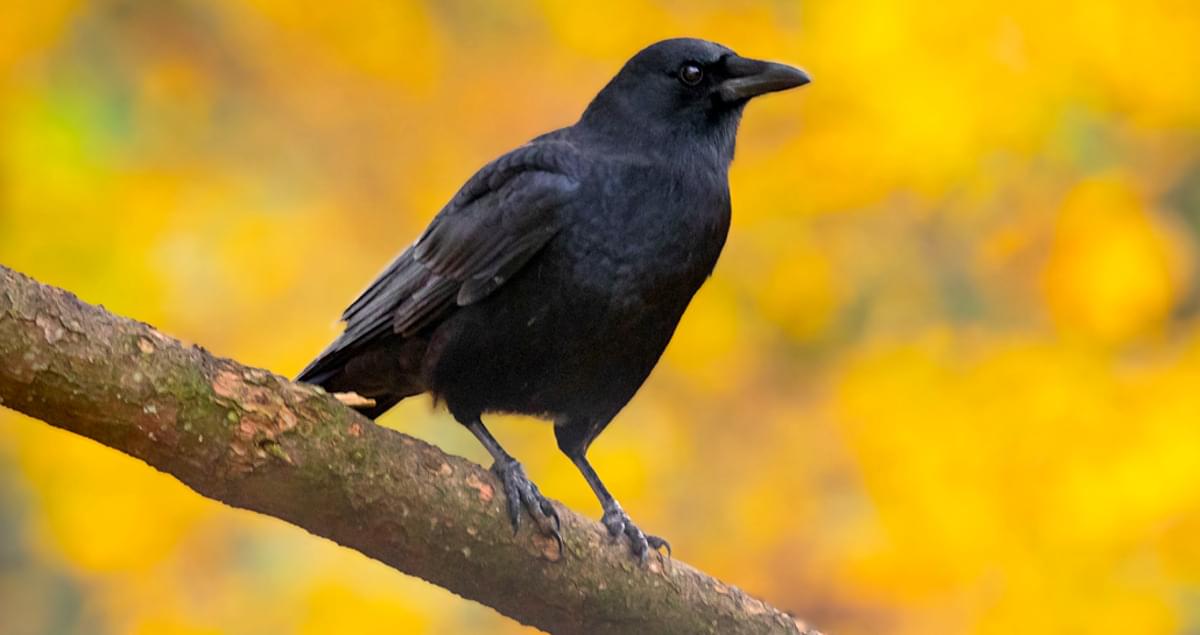
Crows use at least 250 distinct vocalizations — crow researchers at Cornell Lab of Ornithology have catalogued alarm calls, greeting calls, and what appear to be crow "dialects" that differ by geographic region.
Spiritually, a crow calling loudly at you is often interpreted as an urgent message: pay attention, something in your life requires immediate awareness or action.
A Crow Following You
Crows remember faces and will follow humans they recognize, especially those who have fed them. Spiritually, a crow that follows you over multiple days or encounters is often read as a persistent spiritual message: something in your path requires acknowledgment.
It may also indicate that you carry a quality, wisdom, leadership, creativity, that the crow archetype is amplifying back to you.
A Dead Crow
Finding a dead crow carries heavy symbolic weight. Most traditions interpret it as the end of a significant cycle — a relationship, a career chapter, a period of personal struggle.
While the imagery can feel somber, the spiritual reading is not necessarily negative: endings create space for new beginnings. If you encounter a dead crow, it is worth reflecting on what you may be ready to release.
Many Crows? What the Number Means
The number of crows in a sighting has long been a subject of folklore rhymes and spiritual interpretation.
The most famous is the English counting rhyme "One for sorrow, two for joy", but American and Indigenous traditions hold their own numerical meanings. Here is a cross-cultural summary:
| Number of Crows | Traditional Meaning |
|---|---|
| 1 crow | A personal message or wake-up call; pay attention to your surroundings. |
| 2 crows | Balance, partnership, and harmony; a sign to seek cooperation or middle ground. |
| 3 crows | Good luck and celebration in many traditions; a positive omen for a new chapter. |
| 4 crows | Protection and stability; many cultures associate four crows with good fortune. |
| 5 crows | Illness or unsettled energy in some folklore; a prompt to tend to your health. |
| A large flock | Major transition or collective strength; you are not facing change alone. |
Note: Numerical meanings vary significantly between traditions. Use these as prompts for personal reflection rather than fixed predictions.
Black Crow Spiritual Meaning
All American crows (Corvus brachyrhynchos) are black — their iridescent plumage actually reflects blue and purple in direct sunlight. The black color itself carries symbolic weight in most spiritual traditions:
- Black as mystery: the unknown, the unseen, the realm beyond the physical.
- Black as protection: absorbing negative energy before it reaches you.
- Black as authority: in many Indigenous traditions, black birds hold elder status among spirit animals.
- Black as transition: the color of the liminal space between states of being.
Crow's blackness intensifies the crow's core symbolism: transformation is coming, and it may feel dark before it becomes clear.
Are Crows Good or Bad Omens?
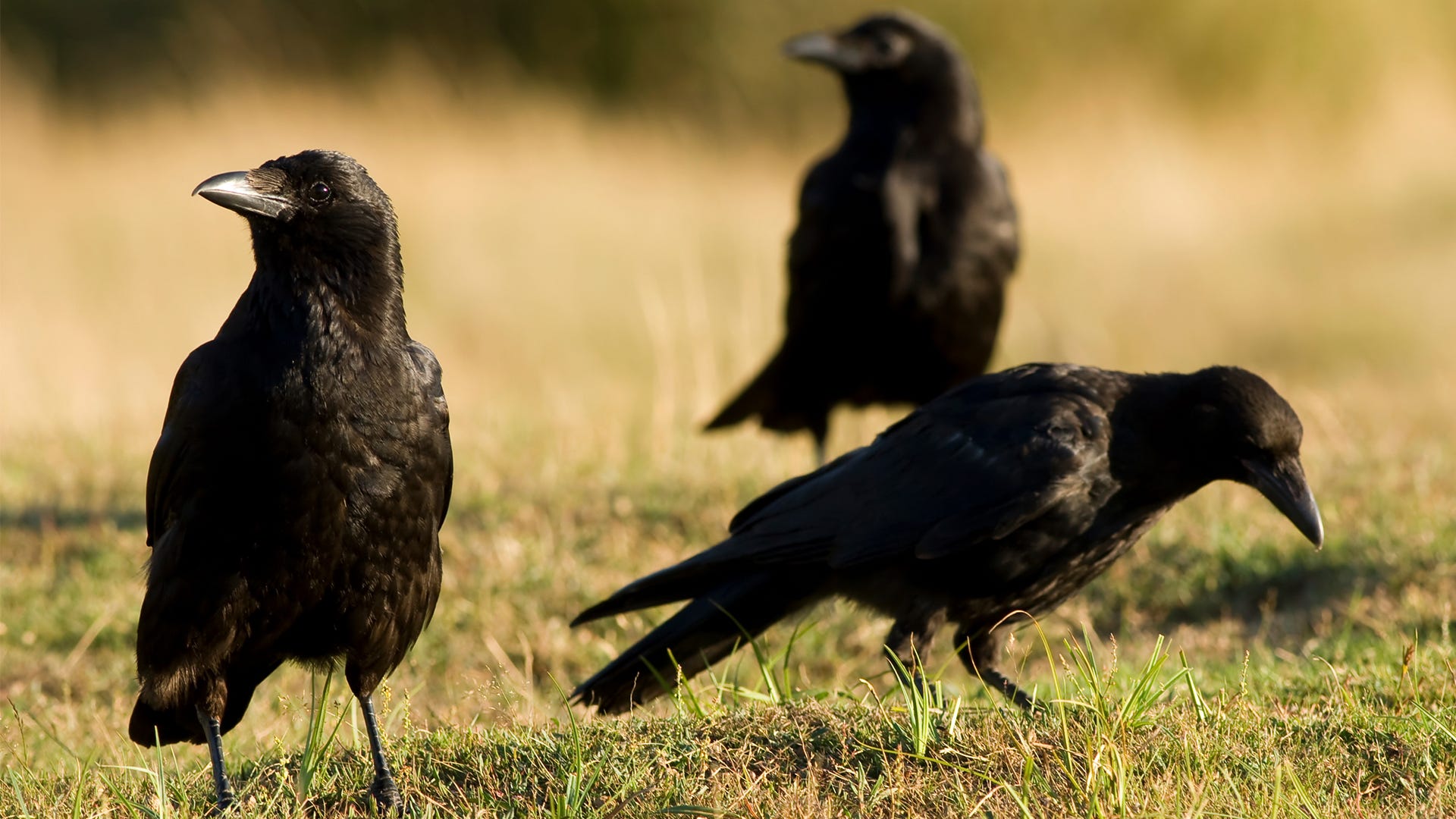
In Western European folklore influenced by medieval Christian symbolism, crows and ravens became associated with death and misfortune. That's largely because they are scavengers that appeared on battlefields.
In contrast, East Asian, Indigenous American, and many African traditions view the crow as a positive and even sacred figure. Japanese farmers historically saw crows as bringers of good harvest. The Crow Nation people regard the crow as a powerful clan totem and source of strength.
The most useful spiritual framework: crows signal that something significant is shifting. They do not determine whether that shift will feel comfortable. Your role is to stay alert, reflect, and respond thoughtfully to whatever is changing.
Is It Lucky To See A Crow?
In many American and Indigenous traditions, yes. A single crow appearing at a critical moment of decision-making is widely interpreted as confirmation that you are heading in the right direction.
Two crows together are considered a particularly auspicious sign in both English counting lore ("two for joy") and many Native American traditions.
Crow symbolism across traditions is less about fortune and more about awareness. The crow does not bring luck, it brings attention. Those who pay attention to their lives tend to notice and act on opportunities that look like luck from the outside.
Crow Dreams: What Do They Mean?
Dreams featuring crows typically arrive during periods of personal transition. The emotional tone of the dream is the most important interpretive clue:

- Crow watching you calmly: a message is waiting; you have the inner wisdom to receive it.
- Crow flying freely: liberation, new perspective, or a period of positive change approaching.
- Crow calling or cawing: your subconscious is sounding an alarm; something in your waking life needs direct attention.
- Dead crow in a dream: completion of a cycle; permission to let go of something that no longer serves you.
- Flock of crows: a major transition involving multiple areas of your life simultaneously; collective change.
- Crow attacking: resistance to necessary change; inner conflict about a transformation you know is coming.
Dream interpretation is deeply personal. Keep a brief dream journal for a week after a significant crow dream — the patterns that emerge in waking life often clarify the message.
FAQs about Crow Spiritual Meanings
What does it mean when a crow caws at you specifically?
Crows distinguish between humans they recognize and strangers. If a crow is calling directly at you, it likely recognizes you — either as a food source or as someone it has reason to be wary of. Spiritually, being singled out by a crow's call is interpreted as a direct message: something in your current situation demands conscious attention.
What is the difference between the crow and the raven's spiritual meaning?
Spiritually, crows tend to be associated with community, communication, and everyday wisdom — they live alongside humans. Ravens carry a more solitary, mystical energy in most traditions, associated with deeper magic, prophecy, and the wisdom of isolation.
What does it mean when a crow follows you?
Crows follow humans they recognize, typically because that person has fed them or represents something reliably interesting. In spiritual terms, a crow that returns to your presence repeatedly is interpreted as a persistent messenger — the universe, or your own subconscious awareness, is trying to ensure you receive a message you may have been deflecting.
What does a crow feather mean spiritually?
In Native American traditions, bird feathers are sacred objects that connect the earth-bound to the sky world. Crow feathers specifically are associated with intelligence and the courage to face uncomfortable truths. Some people keep a found crow feather as a reminder to stay alert and trust their instincts.
Do crows really bring gifts to humans?
Yes, this is documented behavior. The most studied case involves a girl in Seattle named Gabi Mann, who documented years of gifts left by neighborhood crows she had been feeding, including buttons, a miniature light bulb, and a small heart-shaped piece of metal. Crow researchers consider this a form of reciprocal social exchange.
What does the Bible say about crows?
The Bible references ravens more than crows — the two species are closely related and were not always distinguished in ancient texts. In Genesis 8:7, Noah releases a raven to search for dry land. In 1 Kings 17:4–6, ravens miraculously feed the prophet Elijah in the wilderness. Luke 12:24 uses ravens as an example of God's provision: "Consider the ravens: they do not sow or reap...yet God feeds them." The overall biblical portrayal is one of purpose and divine care.
Conclusion
The crow's spiritual meaning has persisted across thousands of years and hundreds of cultures because it reflects something true about the bird itself. Crows are genuinely exceptional: intelligent, observant, socially sophisticated, and present at thresholds including field edges, forest margins, and the boundary between town and wilderness.
If crows visit your yard regularly, consider watching them more deliberately. Their behavior reveals the qualities that made them symbols of wisdom in the first place. The mythology did not create the crow's intelligence. The crow's intelligence created the mythology.
Sources & Further Reading
- Cornell Lab of Ornithology — American Crow Species Account: allaboutbirds.org/guide/American_Crow
- National Audubon Society — Crow Behavior Research: audubon.org
- Marzluff, J. & Angell, T. (2012). Gifts of the Crow. Free Press. — Foundational research on crow cognition and human-crow relationships.
- University of Washington Avian Cognition Lab — crow face recognition studies (2011, 2015).
Share
7 comments
I have a family of crows that are regulars on my property…there are 8 of them now. I also have many chickadees, a few yellow finches, a couple of woodpeckers, and a couple of others that I have not yet identified.
too many urban crows, feed back!!!
crows destroy, a lot of other bird families, I think they are a more of a problem than good, no little birds can survive where there are crows, crows have more cons than pros, feedback !!!
Different Kathleen here in the comments. My small family of crow-nies started coming around in the months after our old family dog passed away. Months filled with grieving. I began leaving unsalted peanuts in the shell on the crow bar (deck railing). It’s been a couple of years now, and they are here every day. Although their snacks have expanded to leftover meat scraps, flour tortillas, and specially made crowmelets (they love scrambled eggs). They bring their fledglings to meet me, and when I come outside, they perch in the trees nearby and make cooing and clicking sounds. Last week, they left their first gift: a cleaned and hollowed out chicken bone, from scraps I’d left out the day before. Crows appreciate patience, respect, and conversation. They mate for life, respect family hierarchy, and are tidy. They have a sense of humor. Crows are a blessing.
I would love crows to come to my deck. I have lots of feeders out for all different birds & squirrels. I even left some shiny objects out for the crows. Now I am reading this is a myth. Crows may even be deterred with the objects left.


