











The Right Birdhouse Hole Size Chart By Species
Many people place birdhouses during the colder months to provide resident birds with habitats, protection from wind and rain, and food sources. Are you planning to place a birdhouse? Before you start, you must understand the appropriate birdhouse hole sizes chart for different bird species to ensure they feel safe and comfortable. This guide will show you the right bird house dimensions chart by species.
Birdhouse Hole Diameter Chart
Each bird species has its own preferences and nesting behaviors. You may quickly refer to the recommended entrance diameters using the birdhouse opening size chart below.
| Bird Species | Hole Diameter | Notes |
|---|---|---|
| Chickadee | 1⅛ inch (2.9 cm) | Perfect for Carolina and Black-capped Chickadees |
| House Wren | 1 inch (2.5 cm) | Keeps out larger birds; wrens prefer smaller, snug spaces |
| Nuthatch | 1¼ inch (3.2 cm) | Suitable for White-breasted and Red-breasted Nuthatches |
| Titmouse | 1¼ inch (3.2 cm) | Works well for Tufted Titmouse |
| Downy Woodpecker | 1¼ inch (3.2 cm) | A slightly deeper box helps attract them |
| Bluebird | 1½ inch (3.8 cm) | Standard for Eastern, Western, and Mountain Bluebirds |
| Tree Swallow | 1½ inch (3.8 cm) | Same as bluebirds, but prefers more interior space |
| Great Crested Flycatcher | 1⅝–1¾ inch (4.1–4.4 cm) | Needs a larger opening for easy access |
| Purple Martin | 2 inch (5.1 cm) | Usually nested in colonies or martin houses |
| House Sparrow | 1¼ inch (3.2 cm) | Common size but best avoided to limit invasives |
| Starling | 2 inch (5.1 cm) | Large openings allow starlings—avoid if possible |
By choosing the appropriate hole size, you can keep out larger, more hostile species and make sure your target birds are completely secure.
Beyond the Entrance: Full Birdhouse Dimensions by Species
While the entrance size determines which bird can enter, the interior dimensions and placement height decide whether they’ll stay and thrive. A well-proportioned birdhouse ensures birds have enough space to build nests, lay eggs, and safely raise their young.
Use the chart below to find the ideal birdhouse dimensions for each species.
| Bird Species | Floor Size (inches) | Height (inches) | Entrance Height Above Floor (inches) | Mounting Height from Ground |
|---|---|---|---|---|
| Chickadee | 4x4 | 8–10 | 6 | 6–15 ft |
| Wren | 4x4 | 6–8 | 4 | 6–10 ft |
| Bluebird | 5x5 | 8–10 | 6 | 4–6 ft |
| Tree Swallow | 5x5 | 8 | 6 | 5–10 ft |
| Sparrow | 5x5 | 8 | 6 | 10–15 ft |
| Nuthatch | 4x4 | 8 | 6 | 6–20 ft |
| Titmouse | 4x4 | 8 | 6 | 6–15 ft |
| Woodpecker | 6x6 | 12–15 | 8 | 10–20 ft |
| Purple Martin | 6x6 | 8 | 1 | 10–20 ft |
| Owl | 10x10 | 15–20 | 12 | 10–30 ft |
These dimensions help ensure proper insulation, airflow, and protection from predators, all essential for a safe and comfortable nesting space.
Note:
Remember to change the height and position of the entryway if you're creating more than one birdhouse. As a result, fewer territorial disputes between species favor comparable breeding environments.
Hence, don’t forget these tips! To avoid overheating or water accumulation, always include drainage exits and ventilation holes. To protect the house from raccoons and cats, mount it firmly on poles or trees.
Best Bird Houses with Customizable Hole Sizes
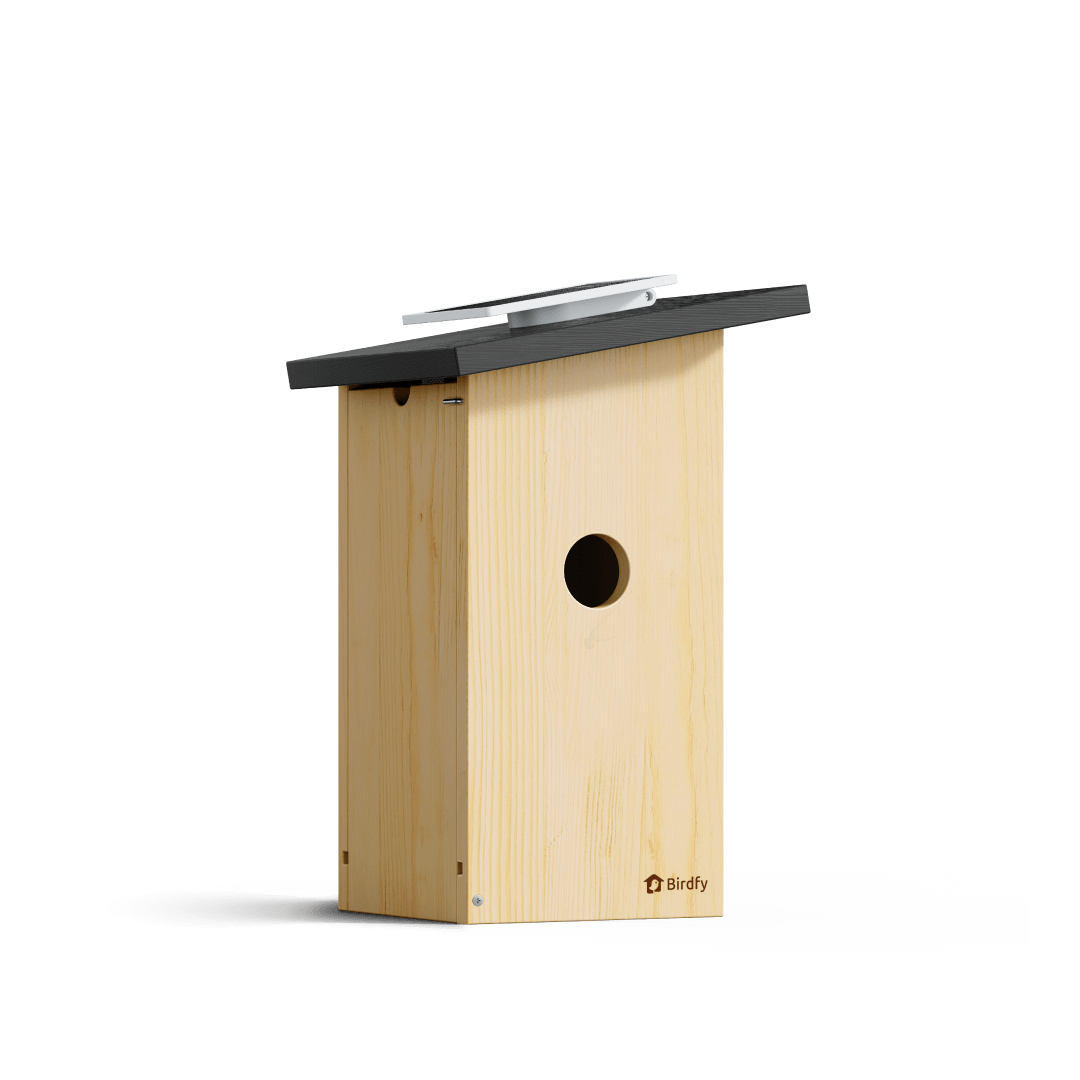
If you’d rather skip the Birdhouse DIY process, a ready-made birdhouse can save you time while keeping the joy of birdwatching alive. The Birdfy Nest Duo - Birdhouse with Duo Cameras is one thoughtful option—it blends creativity with care, allowing you to welcome more bird species into your garden with ease.

Designed with interchangeable entrance panels, the Birdfy Nest Duo lets you adjust the hole size depending on which birds you want to attract—whether it’s wrens, bluebirds, or chickadees. Its sturdy, eco-friendly materials stand strong through winter winds and spring rains, ensuring the nest remains safe and warm.

For those who love observing nature closely, the built-in smart camera connects to your phone so you can quietly watch nesting moments in real time—no disturbance, just gentle closeness to wildlife.
Birdfy Nest Duo Tutorial
How to Take Care of Your Birdhouse
By now, you may have planned the ideal dimensions for your birdhouse, the entrance diameter, and even considered using a Birdfy smart birdhouse with camera. It's now time to think about future maintenance.
In the following sections, we'll guide you through the best placement for your birdhouse, maintenance methods, and seasonal adjustments to ensure your birds feel more comfortable.
1. Choosing the Right Location for Your Birdhouse
Keep your birdhouses out of the direct sunshine and away from loud places. To avoid midday heat and to receive early warmth, the majority of birds favor east-facing boxes.
Tips:
- To reduce competition, space each birdhouse at least 25 feet from one another.
- Don’t place hanging houses in exposed windy regions.
- Put predator guards around poles.
- Maintain a clear flight path to the entrance.
2. Safely maintain and clean the birdhouse
Use mild soap and water to thoroughly clean the box once the chicks have flown. Eliminate outdated nesting materials to avoid the accumulation of germs and mites.
3. Seasonal Birdhouse Care
Perform regular seasonal maintenance to keep the birdhouse in optimal condition and ensure safe nesting every year.
- Spring: Before the nesting season begins, clean and check your birdhouses.
- Summer: Make sure there's adequate ventilation and keep an eye out for heat accumulation.
- Fall: Clear out abandoned nests to make room for species that will overwinter.
- Winter: Keep a few boxes on hand because some birds use houses as roosting places.
FAQs
1. How many bird houses should I have?
The size of your yard and the local bird species will determine the number. Two to three birdhouses placed 25 to 30 feet apart are ideal for a small garden. You can put up to ten in wide fields or larger yards.
Just make sure there is enough space between territorial species, such as wrens or bluebirds. Therefore, keep in mind that good placement is more important than quantity.
2. What is the best type of wood for bird houses?
Cedar is often regarded as the best type of wood for bird houses. Because of its resilience to weathering and decay, cedar is especially well-liked. However, many types of wood can be processed to meet the needs of most scenarios.
Conclusion
It is not difficult to build or select the appropriate birdhouse by using a birdhouse hole size chart. Every type of bird species has its own nesting requirements. With the appropriate bird house dimensions by species, you are welcoming diversity and making the local wildlife successful.
However, if you want something quick and easy that still allows customization, consider the Birdfy Nest Duo, which is adaptable with the hole size, and it has smart capabilities that allow the birdwatchers to enjoy it.
Share
1 comment
If cedar is considered the best, why was bamboo wood chosen for many Birdfy boxes?


